Living with myotonic dystrophy can affect more than just your physical health; DM can also influence how you think, feel, and interact with others. While research in this area is still ongoing, mental and emotional changes are a real part of living with DM. You may notice shifts in your mood, motivation, energy, or social comfort, and these experiences are valid and common in the DM community.
There are many ways to support your emotional well-being. Taking an active role in your mental health can make a meaningful difference in your day-to-day life, no matter the severity of your symptoms. MDF’s Myotonic Dystrophy and Mental Health Handbook provides a detailed, community-focused overview of common mental health symptoms and treatment options, along with recommendations from mental health and neuropsychology experts.
A Note About Caregivers: Caregivers can take on multiple roles (appointment schedulers, drivers, home health aides, etc.), leading to high stress levels due to the significant responsibility of maintaining their loved one’s health and wellbeing. As a result, caregivers may neglect their own health and therefore need supports in place to help manage stress and build resilience. Support groups, mindfulness and meditation, as well as respite care are all effective options for caregivers to receive support (see MDF’s Myotonic Dystrophy and Mental Health Handbook for more information).
| For more MDF mental health resources, visit MDF’s Digital Academy to view these recordings: |
Talking with a mental health professional can help you understand your emotions, improve coping skills, and strengthen relationships. Different types of therapy focus on different goals, such as managing stress, building insight, changing unhelpful thought patterns, or improving emotional regulation. The purpose of therapy is to help you feel better and support you in your daily life. Therapists may include psychologists, psychiatrists, licensed counselors, marriage and family therapists, clinical social workers, psychiatric nurses, or other licensed mental health providers. Before starting therapy, it can be helpful to ask about a provider’s training, experience, and areas of focus. Most importantly, you should feel comfortable, respected, and supported by the therapist you choose.
Mental health is an important part of living well with myotonic dystrophy, and you do not have to navigate it alone. With the right support, many people find renewed confidence, better coping strategies, and a greater sense of connection in their daily lives. Reaching out for help is a sign of strength, and exploring the tools available to you can open the door to a more balanced, fulfilling future.
Download/view the resources
Related videos

Ask-the-Expert: The emotional journey of myotonic dystrophy
Published: June 27, 2025
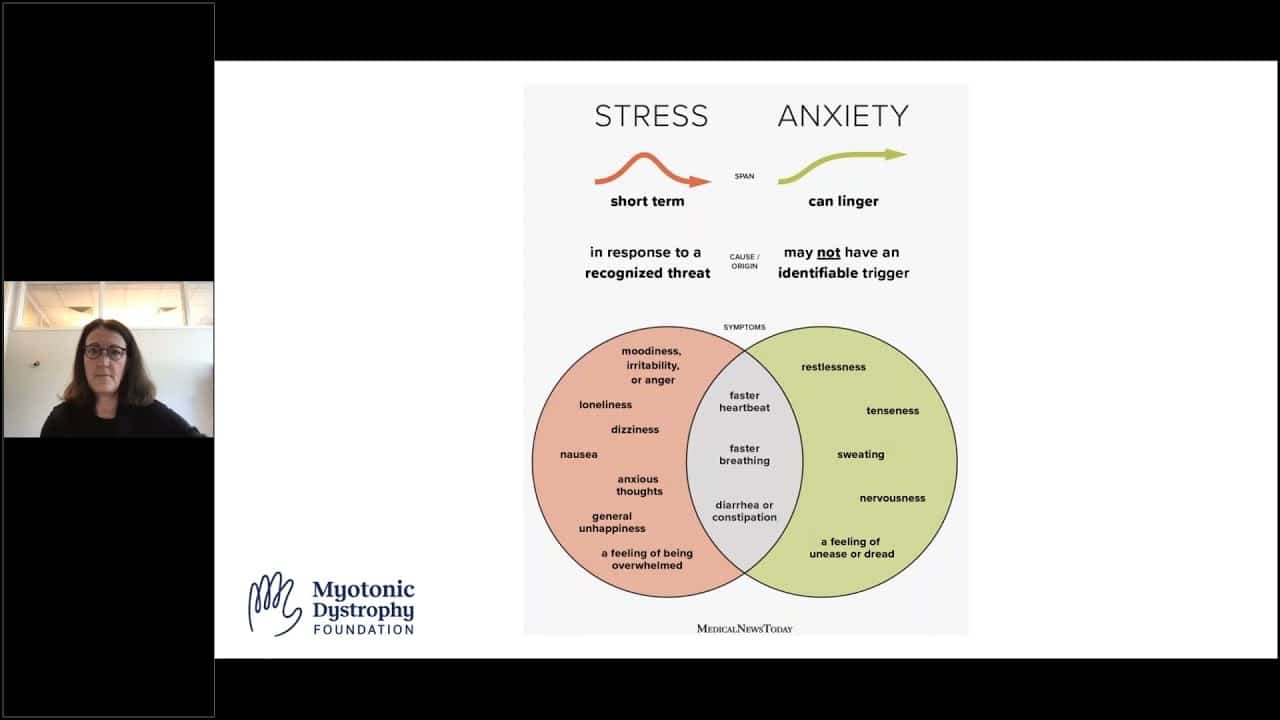
Ask-the-Expert: Myotonic Dystrophy & Anxiety
Published: August 24, 2021
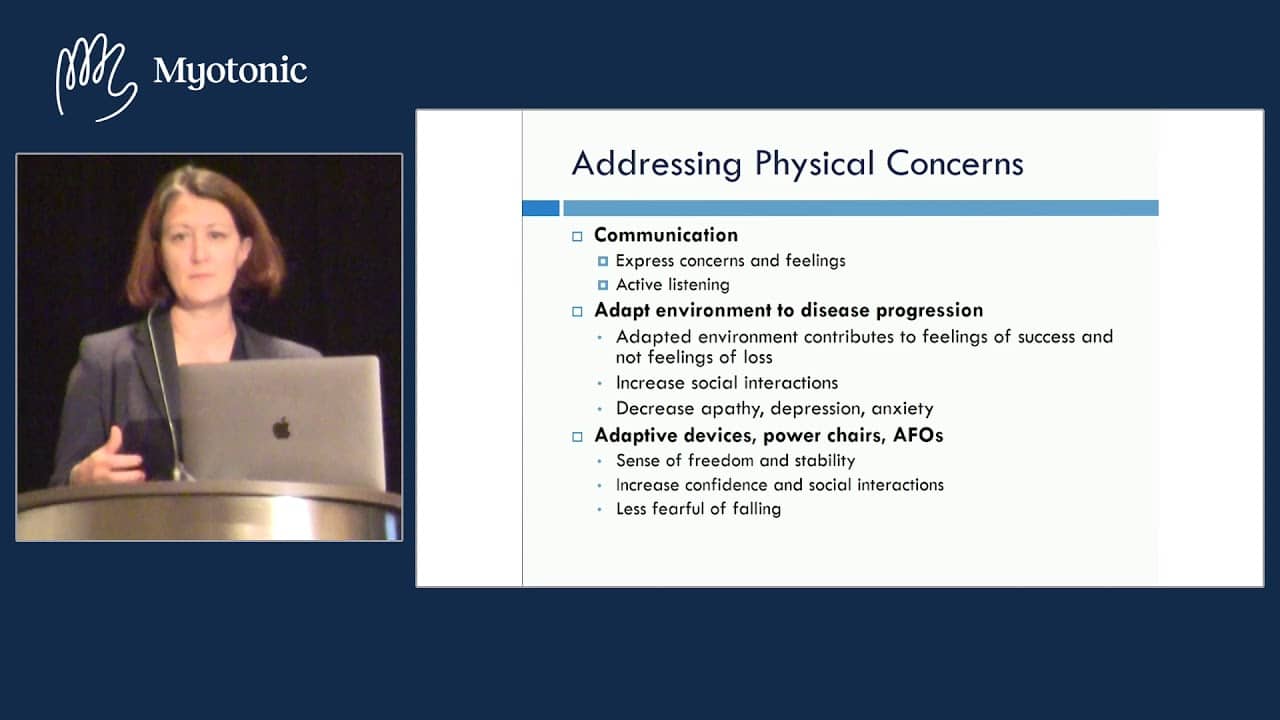
DM and Mental Health: Managing anxiety, depression and other symptoms
Published: September 27, 2017