Myotonic Dystrophy (DM) affects the central nervous system (CNS) in ways that can influence thinking, mood, sleep, and overall brain function. People with DM may experience challenges such as excessive daytime sleepiness, difficulties with attention, memory, and executive functioning, as well as changes in emotional regulation. In some individuals, structural and functional changes in the brain have also been observed. These CNS effects can vary widely from person to person and may evolve over time, making awareness and ongoing monitoring an important part of comprehensive DM care.
Quick facts
Difficulty with thinking and problem solving
Emotional and behavior problems
Excessive daytime sleepiness
Nerve damage in feet and hands
Table of Contents
How DM Affects the CNS – DM1
Patterns:
- DM1 is also a ‘brain disorder,’ and can cause cognitive and behavioral abnormalities which can impact quality of life.
Symptoms:
- Cognitive and behavioral abnormalities can involve deficits in intelligence, executive function, visual-spatial construction, thinking and problem solving, and attention, although the scope and degree of the involvement may vary.
- Difficulty organizing and planning.
- Personality features such as anxiety, avoidant behavior, apathy, lack of initiative or inactivity.
- Mental health disorders including anxiety, substance abuse, or depression.
- Problems with social circumstances ranging from child neglect, acute financial need, unsafe driving, unsafe or unsanitary home, and/or homelessness.
- Excessive daytime sleepiness (otherwise known as hypersomnia) which is associated with an unpredictable and frequent sleep.
Diagnosis:
- Baseline neuropsychological evaluations with your physician.
- Have an annual exam/physical with your doctor to discuss psychiatric or behavioral issues and/or cognitive changes.
Treatment:
- Discuss the possible use of psychostimulants with your doctor if you have apathy and an impairing level of fatigue or excessive daytime sleepiness.
How DM Affects the CNS – DM2
Patterns:
- Specific cognitive defects may be seen in DM2, but they are believed to be milder than those seen in all forms DM1. In addition to the primary alteration in brain function thought to be caused by the DM2 genetic mutation, there may be contributions from the disordered sleep patterns or the hormonal or other systemic abnormalities seen in the disorder.
- Reduced blood flow in the frontal and temporal lobes of the brain.
Symptoms:
- Cognitive and behavioral abnormalities can involve deficits in intelligence, executive function, visual-spatial construction, thinking and problem solving, and attention. The scope and degree of these symptoms may vary.
- Lack of executive function which can cause great difficulty in planning and organizing one’s life, affecting areas such as paying bills, keeping appointments, and arranging schedules.
- Mental health disorders including depression.
- Apathy.
Diagnosis:
- See a mental health care professional (psychologist or psychiatrist) in order to diagnose psychiatric or behavioral abnormalities.
- Test for psychiatric or behavioral issues and cognitive changes as a part of your annual exam with your physician.
- A baseline neuropsychological evaluation is recommended with your doctor. Additional testing can be dictated by your physicians recommendations for your clinical course.
Treatment:
- Discuss the possible use of psychostimulants with your doctor if you have apathy and an impairing level of fatigue or excessive daytime sleepiness.
- Discuss the possible use of anti-depressive medication with your doctor as well. Before starting treatment your doctor should do a cardiac examination including a 12 lead ECG (electrocardiogram).
How DM Affects the CNS – CDM
Patterns:
- Cognitive impairment can be a major problem in children and adolescents with DM1, while muscle symptoms may be relatively discrete or absent within the childhood-onset form.
- Children diagnosed with DM1 can present with a range of complex physical, cognitive, behavioral, and personality features that can have a substantial impact upon development and quality of life status in childhood and during transition to adulthood.
Symptoms:
- Reduced perceptive organization skills.
- Slowed speed of processing.
- Deficits in visual attention, visual constructive abilities, working memory, planning and cognitive flexibility.
- Communication issues.
- Social anxiety.
- Hyperactivity.
Diagnosis:
- Discuss the following tests with your child’s doctor: these assessments should be performed at diagnosis, in preschool if applicable, and should be repeated, depending on the level of functioning, 2-3 times before adulthood.
- Psychometric assessment of global intellectual ability and adaptive functioning.
- Assessment of executive functions.
- Assessment of social cognition.
- Assessment of visuomotor integration and visuospatial ability.
- Assessment of receptive and expressive language ability.
- Assessment of excessive daytime sleepiness (EDS).
- Assessment of learning disability (specific tests for dyscalculia, dyslexia, and dyspraxia).
- Get a referral to a mental health care professionals for psychiatric or behavioral issues for the assessment of Autism Spectrum Disorders, attention deficit disorders with or without hyperactivity, and other behavioral problems.
Treatment:
- Discuss the following treatment options with your doctor:
- Psychostimulants if attention deficits are associated with an impairing level of fatigue or excessive daytime sleepiness.
- Serotonin-enhancing antidepressants if excessive anxiety or other treatable psychiatric symptoms are present.
- Specific cognitive remediation programs to enhance social abilities (visual contact, joint attention, emotional regulation) or executive functions efficiency (impulsivity, attention, working memory, and mental flexibility) using dedicated software (e.g., Cogmed®).
- Language remediation and reading therapy in the presence of cognitive deficits, even in children with normal intelligence. These deficits, including attention deficit, fatigability, and visual-spatial construction disability, can result in reading and spelling difficulties as well as mathematical impairment.
Related videos

DM Type 2 (DM2)
Mind Matters: Navigating Cognitive and Memory Challenges in DM2 - 2025 MDF Confe...
Published: August 28, 2025
This session delves into the cognitive challenges often faced by individuals with myotonic dystrophy type 2 (DM2), focusing on issues s...
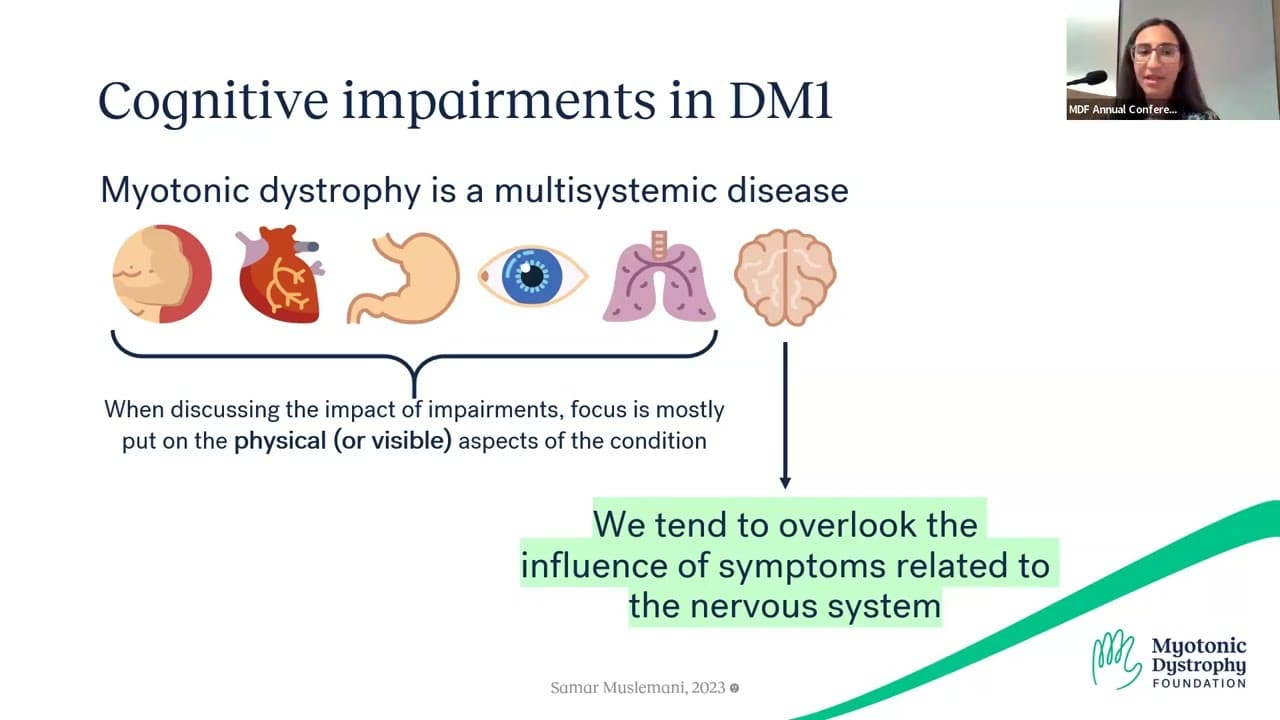
Impact of Cognitive Impairments on Daily Living with Myotonic Dystrophy - 2023 M...
Published: November 21, 2023
Issues related to cognitive impairments are sometimes misunderstood
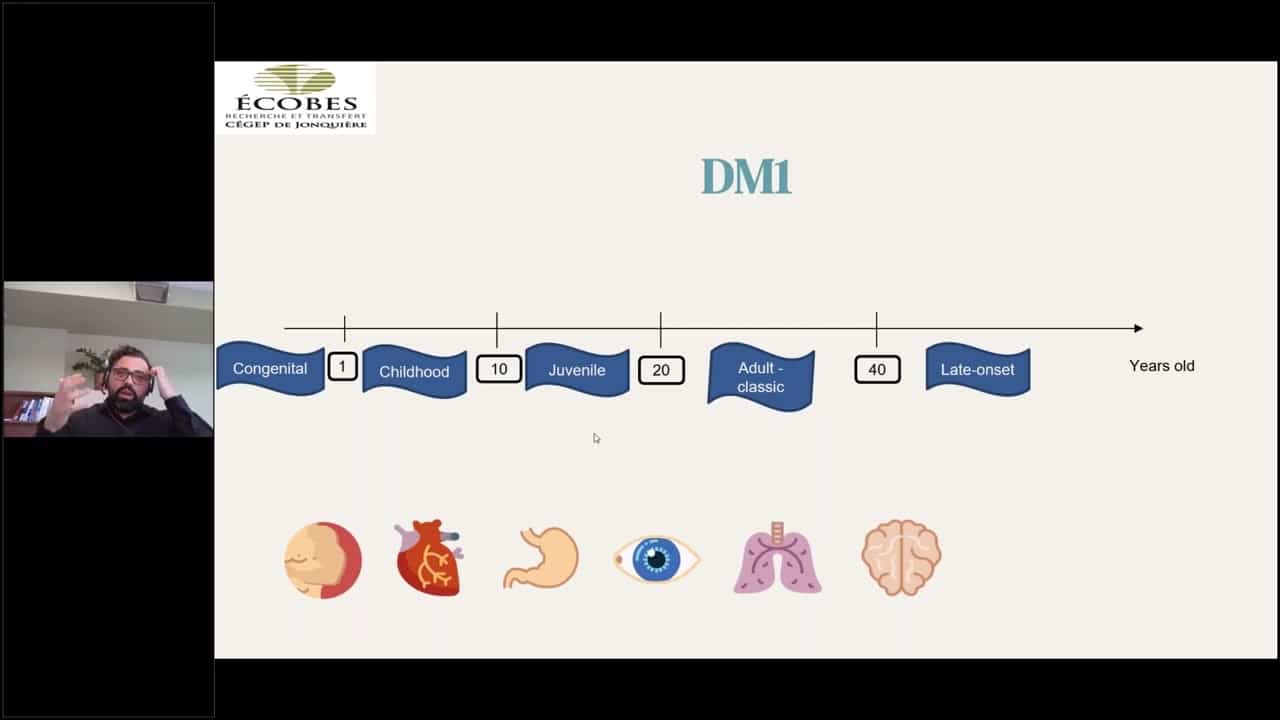
Congenital & childhood onset
Ask-the-Expert: Key neuropsychological features of DM1
Published: April 22, 2022
Do you have questions about brain-fog and the cognitive issues associated with DM1?

DM sleep disorders: Updated research and management strategies
Published: September 27, 2017
Dr. John Day of Stanford University presents an overview of brain-related DM impacts that can affect sleep